
Crown Hair Transplant: Grafts, Timeline and When to Wait
Why the crown is harder than the hairline, how many grafts it needs, how long growth takes and when it is better to wait.
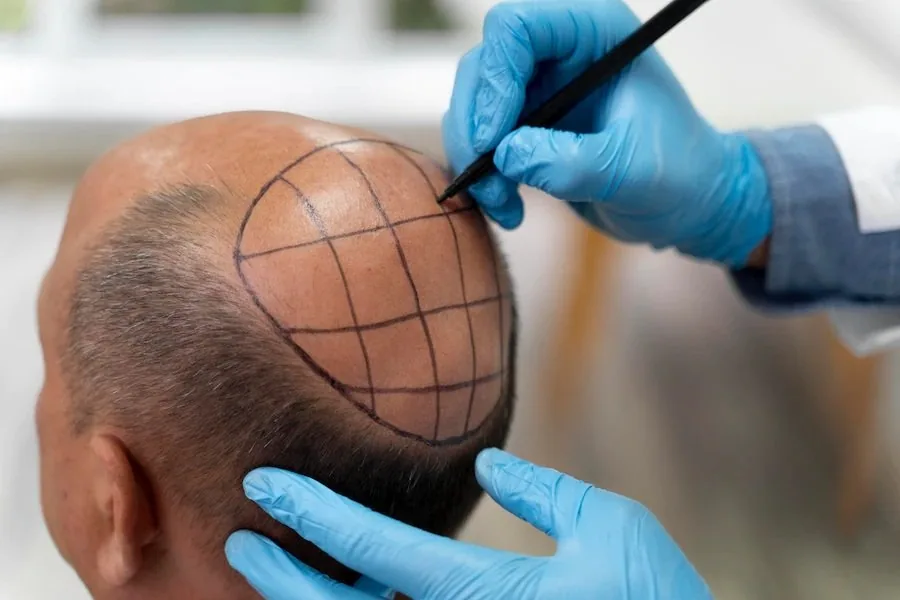
Transparency notice: this guide is written by Mapa Health, a coordinator for treatments in Istanbul licensed by the Turkish Ministry of Health (licence AK-0456). We arrange hair transplants, so we are not neutral. A crown hair transplant is one of the most requested and least understood procedures. Here we explain why the crown behaves differently from the hairline, and when it is better to wait.
Quick answer
A crown hair transplant fills a thinning or bald spot at the top back of the head, also called the vertex. It is harder than a hairline transplant for three reasons: the hair grows in a spiral, the area is large and curved, and hair loss there often continues for longer. As a rough guide, a small crown needs around 800 to 1,500 grafts and a medium crown 1,500 to 2,500, while a large bald crown can need more than the donor area can spare. Growth is slower than at the front, and the final result usually shows after 12 to 18 months. In younger men whose hair loss is still active, doctors often treat the hairline first and the crown later, or not at all.
At a glance
The crown, or vertex, is the area at the top back of the head where the hair grows in a whorl.
Small crown: about 800 to 1,500 grafts. Medium crown: about 1,500 to 2,500 grafts.
A large bald crown competes with the hairline for the same limited donor grafts.
Final result: usually after 12 to 18 months, later than at the hairline.
Young patients with active hair loss are often advised to wait or to treat the front first.
Mapa Health rating: 4.5 out of 5 on Trustpilot from 108 verified reviews, more than 500 patients since 2020.
Why the crown is different from the hairline
The first reason is the whorl. At the crown, hair grows in a spiral from a central point. Every graft has to follow that direction and angle, or the result looks stiff and unnatural, like a brush. Placing grafts here takes more time and more experience than at the front.
The second reason is size and shape. The crown is a large, curved area with no clear edge. Light falls on it from above, and the scalp shows through more easily. The same number of grafts that gives a dense hairline looks noticeably thinner when spread over the crown.
The third reason is progression. In many men the crown keeps thinning for years. If a small bald spot is filled today and the hair around it keeps falling out, the transplanted patch can end up as an island in a bigger bald area.
How many grafts the crown needs
The figures below are guide values from clinics and the medical literature, not a promise for your case. They describe the crown alone, not the hairline.
Small crown, a bald spot of a few centimetres: about 800 to 1,500 grafts.
Medium crown, clearly visible from above: about 1,500 to 2,500 grafts.
Large bald crown that merges with thinning on top: often more than 2,500 grafts, usually limited by the donor area.
Most men have about 4,000 to 7,000 grafts available from the donor area over their whole life. If the hairline and the crown both need work, they share that budget. This is why the plan matters more than the number. How the total is worked out is explained in How many grafts do I need for a hair transplant?.
A common myth: filling the crown fully is just a question of more grafts
Many patients believe a bald crown can look as dense as it did at 20 if enough grafts are placed. In practice the crown is usually transplanted at a lower density than the hairline, because the area is large and the donor supply is limited. A good result at the crown looks full from a normal distance, but it is rarely as dense as the original hair.
Mapa Health works with a fixed price for hair transplants that does not depend on the number of grafts. That does not mean the doctor fills the crown with as many grafts as possible. He places as many as your donor area can safely give, and keeps a reserve if your hairline may need work later.
Hairline first or crown first?
For most patients the hairline comes first. It frames the face, has the biggest visible effect and is usually more stable. The crown is often treated in a second session, about a year or more later, once it is clear how the hair loss develops.
Crown first can make sense when the hairline is still intact, the crown is the main concern and the hair loss there has been stable for some time. Treating both in one session is only possible when the donor area is dense enough to supply both without looking thin afterwards. The doctor decides this after examining the donor area in person.
Growth timeline at the crown
The crown follows the same pattern as the rest of the head, only more slowly. The transplanted hairs fall out in the first weeks, which is normal. New, fine hairs usually appear from the fourth month. Density builds over the following months, and the final result at the crown often shows only after 12 to 18 months, later than at the hairline. What is normal in each month is explained in Hair transplant results month by month.
Medication and the crown
Medication that slows further hair loss is often discussed for the crown, because this is where hair loss tends to continue longest. It cannot regrow hair that is fully gone, but it can help protect the hair around a future transplant. Whether medication is right for you and which side effects are possible is something to discuss with your GP or a dermatologist. Mapa Health does not give recommendations on this.
How a crown transplant is planned at Mapa Health
At Mapa Health (licence AK-0456) we ask for photos from the front, from above and of the back of the head, plus an older photo if you have one, so that the doctor can see how your hair loss has developed. Based on these we give you a provisional assessment. The final plan is made by the doctor on the first day in Istanbul, after examining your donor area. The doctor carries out all the key steps personally, including the angle and direction of each graft at the whorl. Who really works during the operation is explained in Hair transplant in Turkey: who really operates?.
Which technique suits the crown, Sapphire FUE, DHI or classic FUE, is covered in DHI or FUE in Turkey. Prices and the procedure are on the page Hair transplant in Turkey.
Questions to ask before a crown transplant
Ask how the doctor will match the direction of your whorl. Ask what density is planned for the crown and how that compares with the hairline. Ask how many grafts will remain in the donor area afterwards, and whether that is enough if your hairline also needs work later. And ask what happens if the hair around the crown keeps thinning. Clear answers to these questions say more about a provider than case examples photos.
Who a crown transplant is not right for
A crown transplant is not right if the hair loss at the crown started recently and is still progressing quickly, if the donor area is thin, or if the thinning is diffuse across the whole top of the head. It is also not right for anyone expecting the crown to look as dense as in their teens. Young men whose hair loss is still active are usually better off waiting. Mapa Health (licence AK-0456) tells you openly when we think a crown transplant does not make sense in your case.
Frequently Asked Questions
How many grafts does a crown hair transplant need?
As a guide, a small crown needs about 800 to 1,500 grafts and a medium crown about 1,500 to 2,500. A large bald crown can need more than the donor area can spare. The exact number is set by the doctor after an examination.
Why is the crown harder to transplant than the hairline?
The hair grows in a spiral, the area is large and curved, and hair loss there often continues for longer. Grafts have to follow the whorl exactly to look natural.
How long does it take to see results at the crown?
New hairs usually appear from the fourth month. The final result at the crown often shows only after 12 to 18 months, later than at the hairline.
Should I treat the hairline or the crown first?
For most patients the hairline comes first, because it has the biggest visible effect and is usually more stable. The crown is often treated later, once the hair loss has settled.
Can the hairline and crown be done in one session?
Only if the donor area is dense enough to supply both without looking thin afterwards. Otherwise the work is split over two sessions.
Will a crown transplant look as dense as my original hair?
Usually not. The crown is transplanted at a lower density than the original hair, but a good result looks full from a normal distance.
How do I get an honest assessment for my case?
Send Mapa Health photos from the front, from above and of the back of your head by email to info@mapahealth.com, ideally with an older photo for comparison. Mapa Health is licensed by the Turkish Ministry of Health (AK-0456) and rated 4.5 out of 5 on Trustpilot.
About the Publisher
This article was prepared by the Mapa Health Editorial Team. Mapa Health is a medical tourism coordinator authorized by the T.C. Ministry of Health (Authorization No. AK-0456) since August 2022. Since 2020, Mapa Health has accompanied over 500 international patients to certified partner facilities in Istanbul. For a personalized consultation: info@mapahealth.com